

Microsoft Cancels Anthropic Licenses, Anthropic Hits $965B, & Apple Plays a Different Game
Microsoft and Uber rein in AI coding spend, Anthropic raises $65B at $965B, and Apple keeps prices steady while memory prices spike


Two weeks ago I asked who was actually realizing value from all this AI spend. With Anthropic’s $44 billion and OpenAI’s $24 billion ARR, I wondered how many of their customers had realized $68 billion in value this year. This week two of the biggest customers answered on the record.
Paid subscribers also get the AI Playbook at no extra cost, a growing library of AI workflows you can copy and run, sorted by your role. Open the AI Playbook →
Microsoft & Uber Stop Counting Tokens
Microsoft is pulling internal Claude Code by June 30, less than six months after rolling it out, because it burned through its entire annual AI budget in a few months. Per-engineer costs ran $500 to $2,000 a month, which made the tool more expensive than some of the engineers using it. Microsoft is steering those developers to its own GitHub Copilot CLI instead.
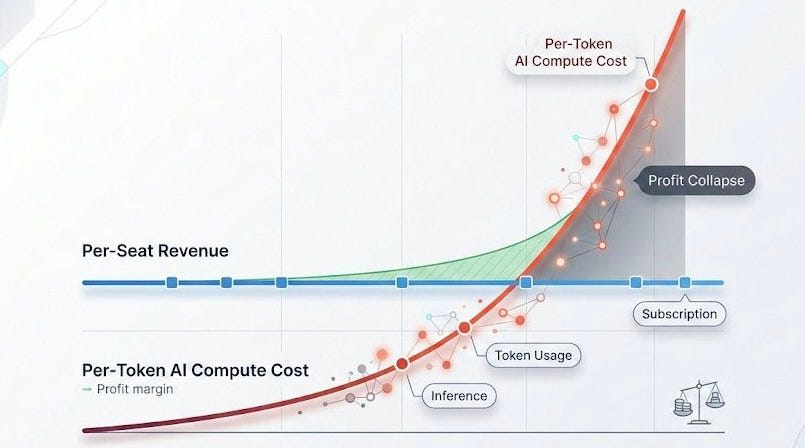
Uber was more explicit, COO Andrew Macdonald coined “tokenmaxxing" for rising token consumption that doesn’t show up in the product, and when asked to connect the spend to better consumer features he said “that link is not there yet.” This is at a company where 95% of engineers use AI monthly and 70% of committed code is AI-generated. Uber burned its entire 2026 AI-tools budget in four months, and Duolingo is in the same chorus.
The shift from flat seats to token-based billing broke budgets. I personally have a friend at Meta who spent $1K per day on tokens. You pay for every line the model generates, and the lines are going parabolic. More lines of code does not mean more products and more revenue, and it may not even be the right work done.
If you recall, this is the gap I flagged on May 21. The ARR is real, but a chunk of it is consumption that the buyers themselves can’t yet tie to value, and execs are now demanding outcome-linked pricing instead of seat-count renewals.
An IT leader said it best to me this week, “we all know how powerful AI is, we just don’t know how to tie it back to value”.
Anthropic Raises $65B While Customers Question Their Spend
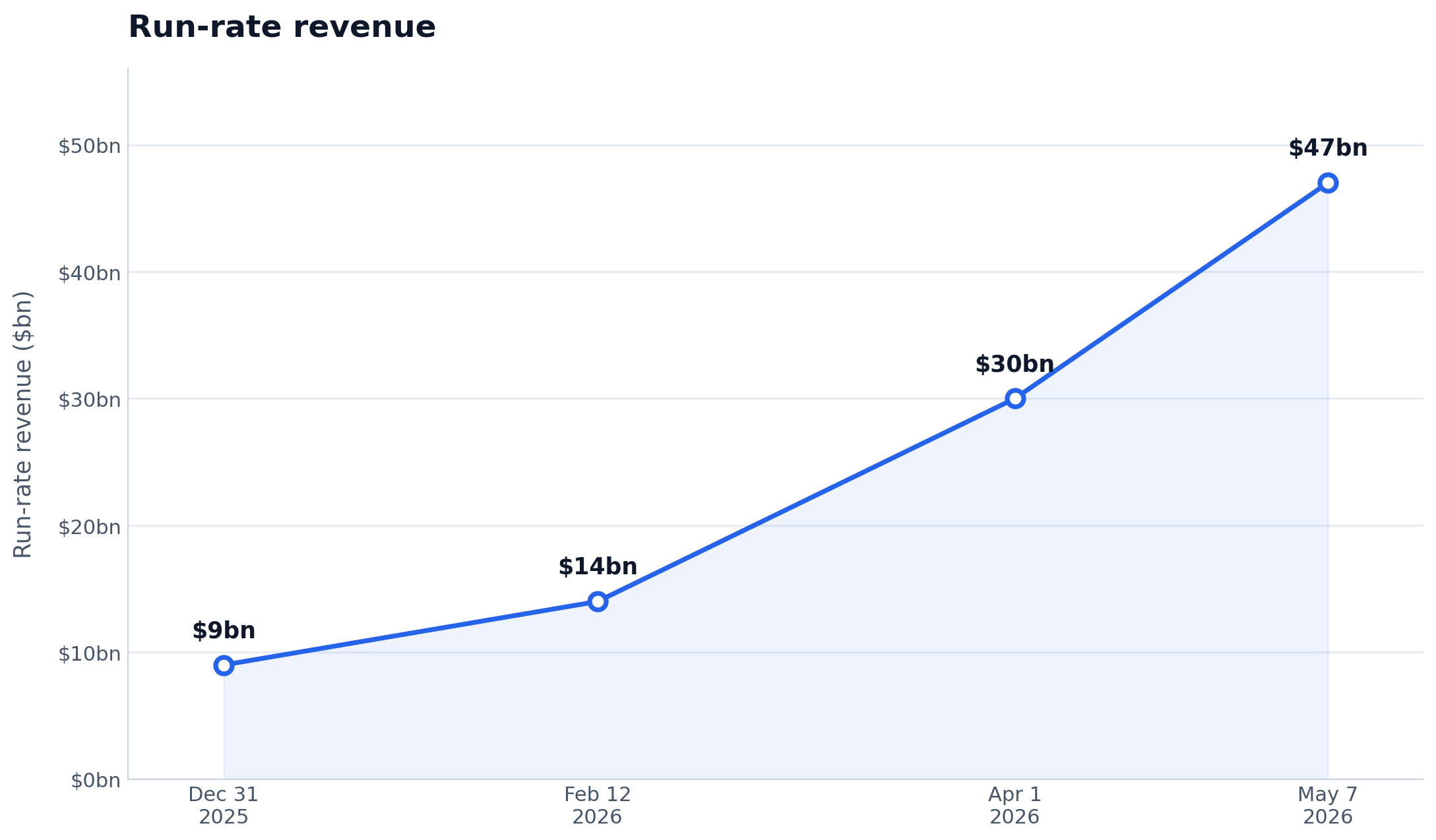
The same week customers pumped the brakes, Anthropic closed a $65 billion round at a $965 billion valuation, passing OpenAI as the most valuable AI startup. Altimeter, Dragoneer, Greenoaks, and Sequoia led, with about $15 billion of it coming from hyperscalers, including $5 billion from Amazon. Run-rate revenue has increased from $10 billion at the end of 2025 to $47 billion now.
On the same day, Anthropic shipped Claude Opus 4.8, which it says is four times less likely than 4.7 to let flaws in its own code slip through, at the same $5 per million input and $25 per million output tokens.
I agree, Claude Code felt demonstrably better the day of release, and I only realized later that I was on Opus 4.8.
Anthropic also previewed Mythos, its most capable model, going wide “in the coming weeks.”
Anthropic is being valued at $965 billion on revenue that runs on token consumption, but that consumption is exactly what Microsoft and Uber just started cutting.
The bull case is that the $47 billion run rate is up nearly 5x in a year and a better, cheaper model (4.8 at the same price) gives customers more value per token, which keeps them in. The bear case is that “more value per token” can mean fewer tokens billed, and a model that catches its own bugs is a model you babysit less and pay less for.
For a company priced on consumption, efficiency cuts both ways.
Apple Eats AI’s Memory Tax to Take Market Share
If you have shopped for a computer recently, you may have noticed a sharp pricing increase. The same labs and hyperscalers racing to build AI are buying up the world’s memory supply, and Samsung, SK Hynix, and Micron have shifted 93% of their combined output to high-bandwidth memory for AI accelerators, which starved the regular RAM in phones, laptops, and consoles.
DRAM contract prices rose over 58% quarter-over-quarter in Q2, NAND flash rose over 70%, the biggest jumps in over a decade.
This Reddit post summed it all up pretty well.
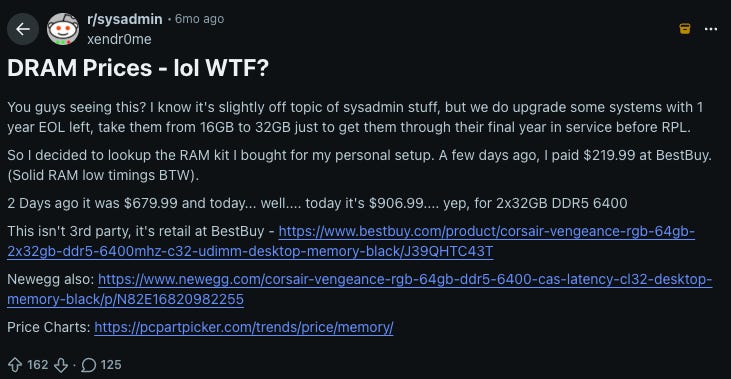
And you probably felt the pain as well, unless you bought from Apple. Apple told suppliers it will hold the iPhone 18 starting price flat and raise prices elsewhere as little as possible, which means they’re eating the costs.
Why? My guess is market share. The AI boom is raising component costs for every hardware maker at once, and Apple is the one holding prices flat. They’re using this as a wedge so they can capture market share from Dell, Samsung, and Sony. A few quarters of thinner hardware margin buys phone and PC share that is hard to claw back once a customer switches. Seeing that Apple makes 25% of their revenue in services, they probably figure they’ll make up for it later.
And if LLMs get commoditized, they could make even more in services. Google pays Apple $20 billion each year so they’re the search default, will an LLM pay so they’re the default in the future?
They’re only paying $1 billion a year for Gemini right now, which is nothing when you consider GPT-5’s training run cost roughly $2 billion alone.
If Apple could get a deal like that with their current market share, what can they get if even more people use their devices?
It’s a bet, for sure, but compared to hyperscalers spending $700 billion on AI, it’s a sensible bet that could have a lot of upside.
The Signal
The Signal is normally for paid subscribers, and one edition each month is free for all subscribers. 3 takes that didn’t fit above, plus one bet.
1. The Claude Code cuts move the spend. When Microsoft and Uber drop Claude Code, the budget doesn’t go back to hand-written code, it goes to Cursor or OpenAI’s Codex, the tools developers actually ask for. Every coding vendor collects the same token tax, so a cut at Anthropic is a sale for someone else, not a contraction in spend. Microsoft is the only one routing the money home, to its own GitHub Copilot, and Copilot is the tool nobody switches to until it gets good. Read the week as a vendor reshuffle, not the start of an AI pullback.
2. Mythos finds the bugs hiding in plain sight, and that’s the ROI. Mythos found a 27-year-old vulnerability in OpenBSD, it’s capable of finding bugs that humans never had the capacity for. Given that, companies will have no choice but to procure Mythos and ensure their software isn’t vulnerable. And that’s exactly the story Anthropic shared while raising at $965 billion.
3. Grok Build is seizing the moment. xAI shipping Grok Build the same week Microsoft and Uber cut Claude Code is the opposite of bad timing. Companies aren’t leaving AI coding, but they are shopping for a better ROI, so there’s no time like the present for xAI.
My bet: When Mythos opens past its 50 Glasswing partners to everyone, it holds at or above its $25 and $125 per million token preview price before 2027. Anthropic just raised at $965 billion on a model that finds flaws nobody caught in a decade, and you don’t cap your own upside heading into an IPO, no matter how loud Microsoft and Uber get.
That was The Signal, free this week. Paid subscribers get it with every issue, plus the AI Playbook and the full archive. Join them for $90/year
very insightful article