



Before we start, paid subscribers now get the AI Playbook at no extra cost. This is a growing library of AI workflows you can copy and run, sorted by your role.
I built these while running Verum. We’re a lean startup, so we cut costs everywhere we can, like scoring & coaching every call without Gong (~$1,400/seat/yr). More will be shipped each week.
The AI Playbook

Every workflow was built while building and running my company Verum. They replaced a SaaS line item, an hour of my week, or both. Now they’re yours, included with your paid subscription.
What would help you next? Reply to this email or write me at rt@veruminc.com with the workflows you want.
I appreciate all of your support over the past 3+ years, and if there are more ways I can help, please reach out.
SpaceX’s $2T IPO Is a Bet That AI Moves to Orbit
SpaceX filed its S-1 on May 20, targeting a $1.75 to $2 trillion valuation and a $75 billion raise. That is the largest IPO in history, past Saudi Aramco’s $1.7 trillion debut in 2019. It lists on Nasdaq as SPCX around June 12.
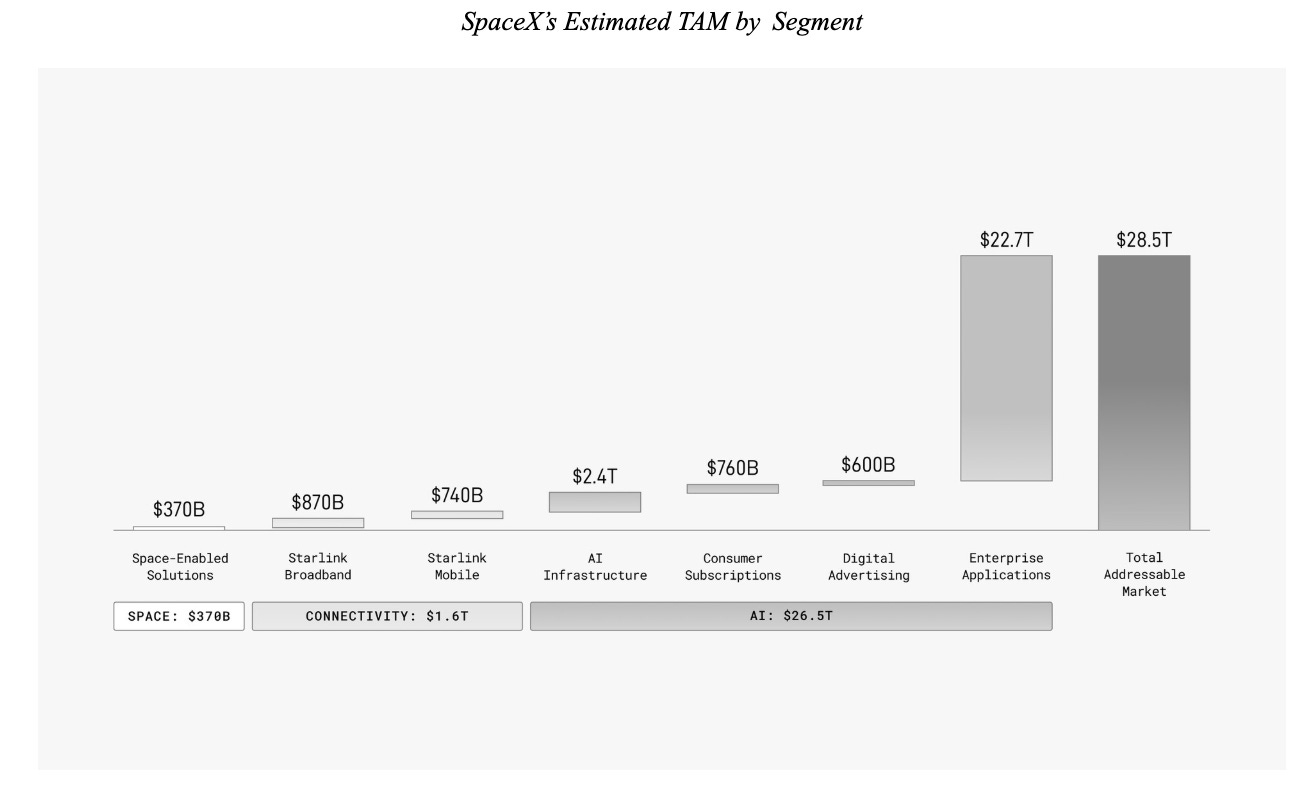
But then you look at the chart, and SpaceX claims a $28.5 trillion total addressable market, and $26.5 trillion of it is AI. Enterprise Applications alone is $22.7 trillion, larger than the rest of the company combined by a factor of fifteen. The launch business that made SpaceX is only $370 billion, a rounding error on the slide (and a decent business itself).
But the numbers below the top line are more concerning. After folding in xAI in February, SpaceX posted a $4.94 billion net loss for 2025 and a $4.28 billion loss in Q1 2026 alone, with the AI segment running a $6.4 billion operating loss against $3.2 billion of revenue. Starlink is the real business today, $11.4 billion in revenue and $4.4 billion in operating income.
Strip away the TAM theater, though, and I think their bet makes sense. SpaceX is the company best positioned to put the data center in orbit, and that is where a large share of AI compute is heading.
Many are scoffing at this, and I think it’s because they’re imagining these massive data centers being launched into outer space, like this.
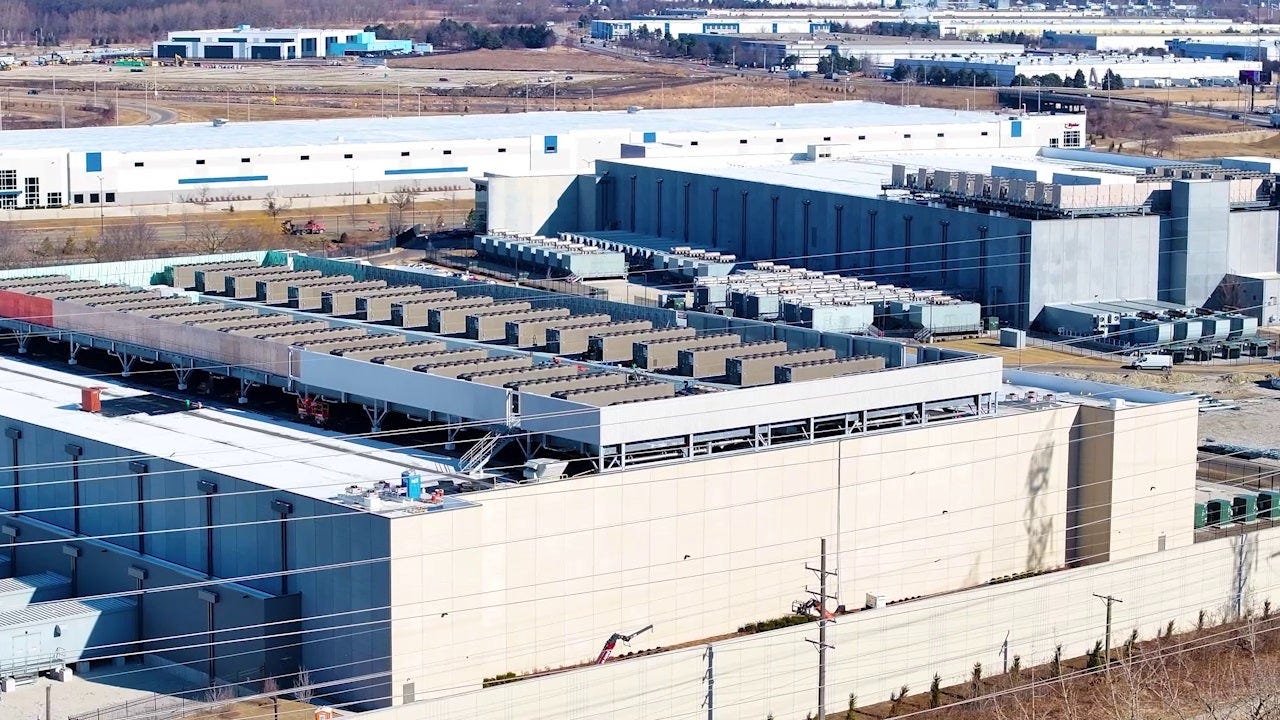
But that’s not happening. Instead, these “space data centers” will be more like a satellite as a rack, like this.
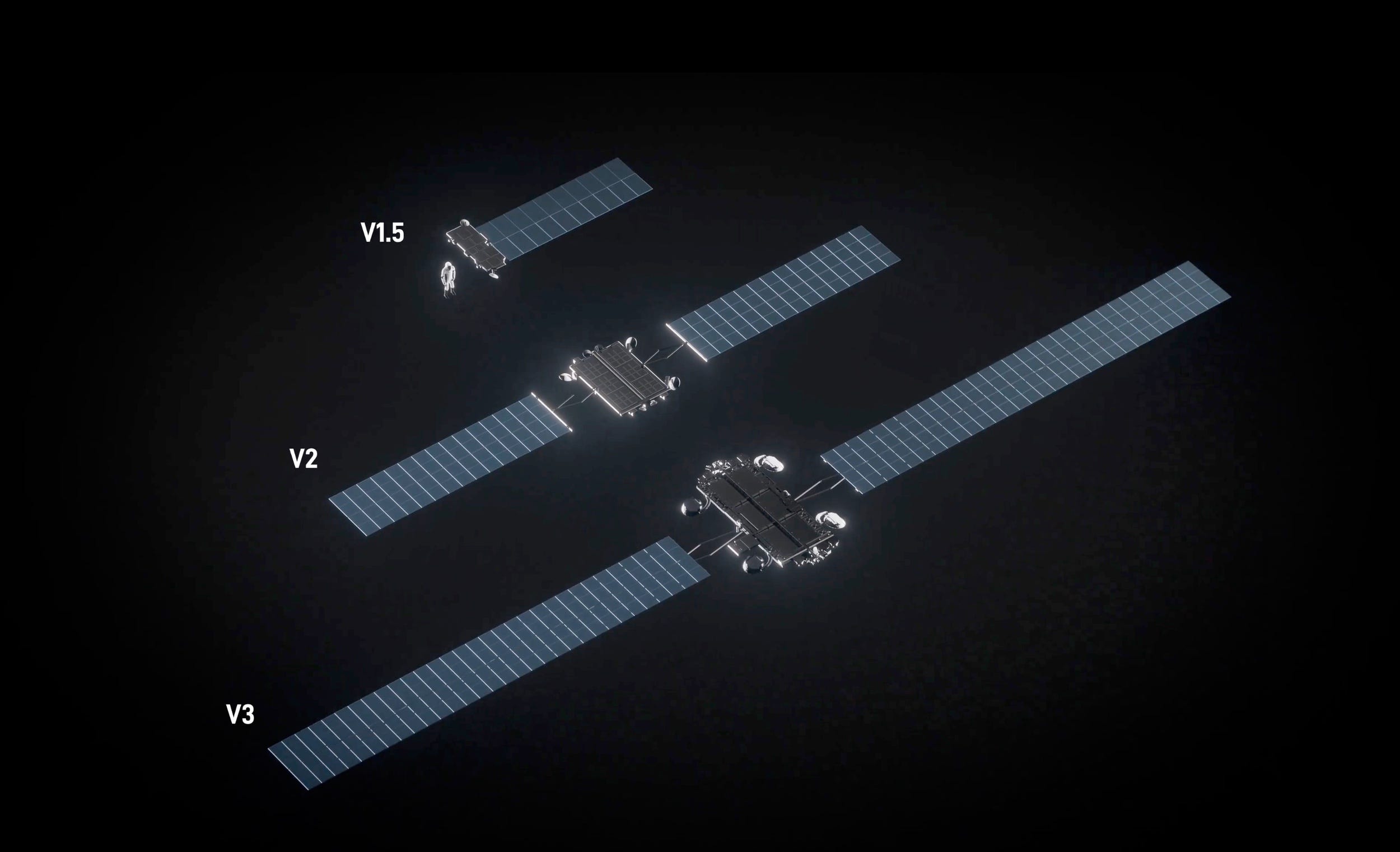
Seems more doable, right? They’ll match the cumulative capacity of those massive data centers by communicating with lasers.
Make the racks disposable and you solve reliability the way SpaceX solves everything, with volume. SpaceX has already filed for a constellation of up to one million satellites that operate as orbital data centers, sun-synchronous so they sit in sunlight more than 99% of the time. Starcloud has run a version of Gemini in space on an H100-class board, and Orbital, funded by a16z, is building nodes aimed at one workload in particular.
Agentic inference has no human waiting on the other end, so latency isn’t as big of a deal. A request can take an extra half second to bounce off orbit and nobody notices, which means you can run it on cheaper, slower memory and good-enough compute. As agents replace people in the loop, this can become the largest compute market, because it scales with compute instead of with humans.
And while building on Earth should be cheaper, data centers are requiring more permission, and opposition is getting more fierce.
A 1-gigawatt orbital data center should cost roughly 3x its earthbound twin. But if you can’t get the one on Earth approved, space becomes a lot more attractive. The TAM is absurd, but the demand for intelligence is insatiable, so their TAM could be realized if there’s no alternative for building intelligence.
OpenAI Starts the IPO Clock
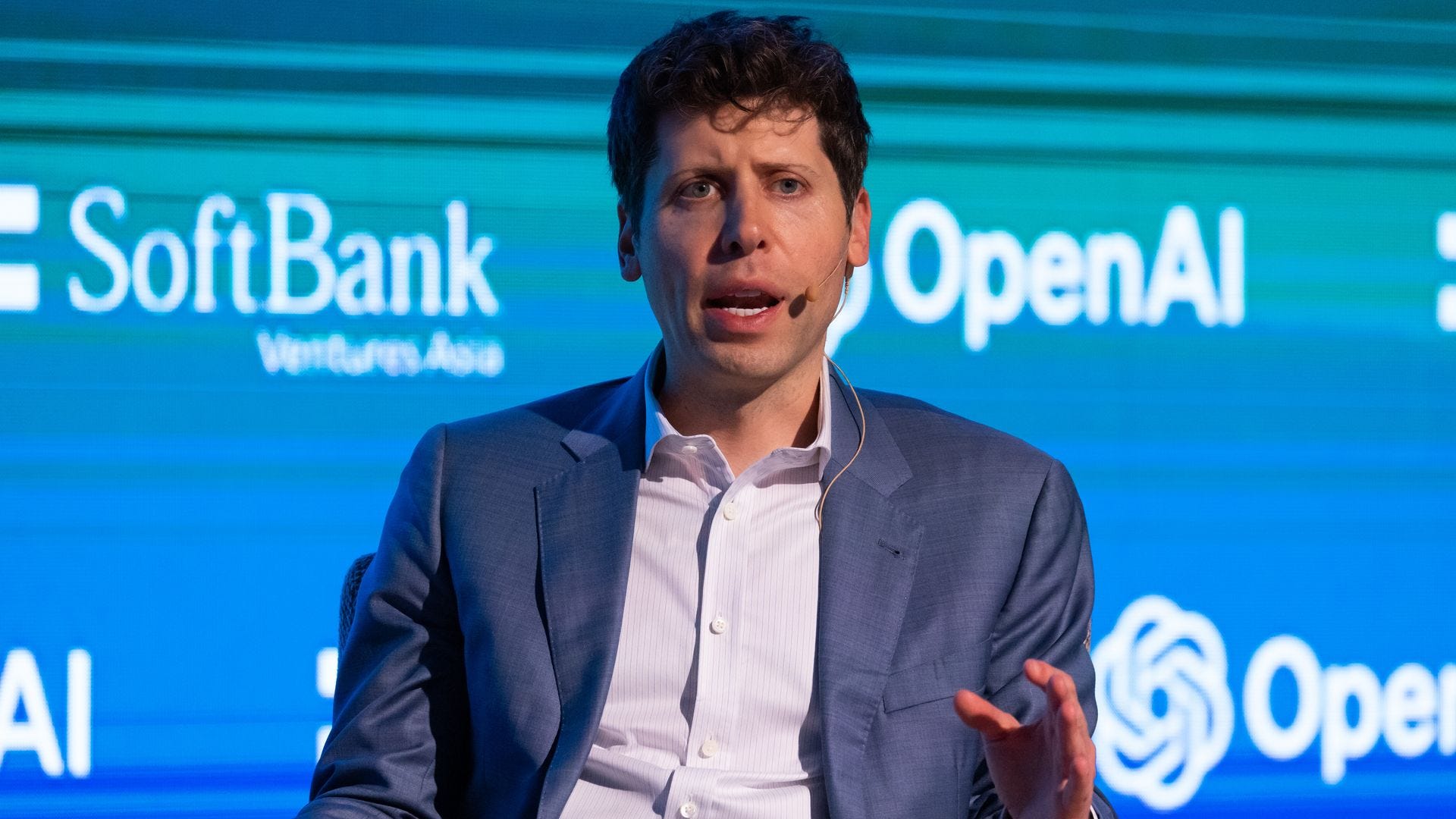
OpenAI filed confidential IPO paperwork on May 22, with Sam Altman pushing for a September debut at a valuation that could pass $1 trillion, up from $852 billion in March. Q1 revenue was around $6 billion, and the company remains, in its own filings’ language, deeply unprofitable. Microsoft holds about 27%.
Last week I asked a simple question: OpenAI and Anthropic collect $68 billion a year between them, but have their customers realized $68 billion in value? AI-blamed layoffs account for maybe $7 billion in removed payroll, and Gartner found even those savings are mostly not showing up.
And if enterprises are seeing a ton of value, why is OpenAI scaling up their forward deployed engineers, like the $4 billion Deployment Company? FDEs help when the product can’t realize ROI on its own, and they’re hoping these FDEs can solve the last mile.
That loops straight back to the number investors are looking for. An engineer living inside a customer is a services line, and services do not earn software margins. So the S-1 has to answer two things at once: what it costs to serve a token, and how much of that $6 billion is high-margin software versus headcount-heavy deployment work dressed up as product.
September is when the smartest bears in the world will read the footnotes, let’s see what those gross margins are.
Cloudflare Puts a Number on the AI Layoff
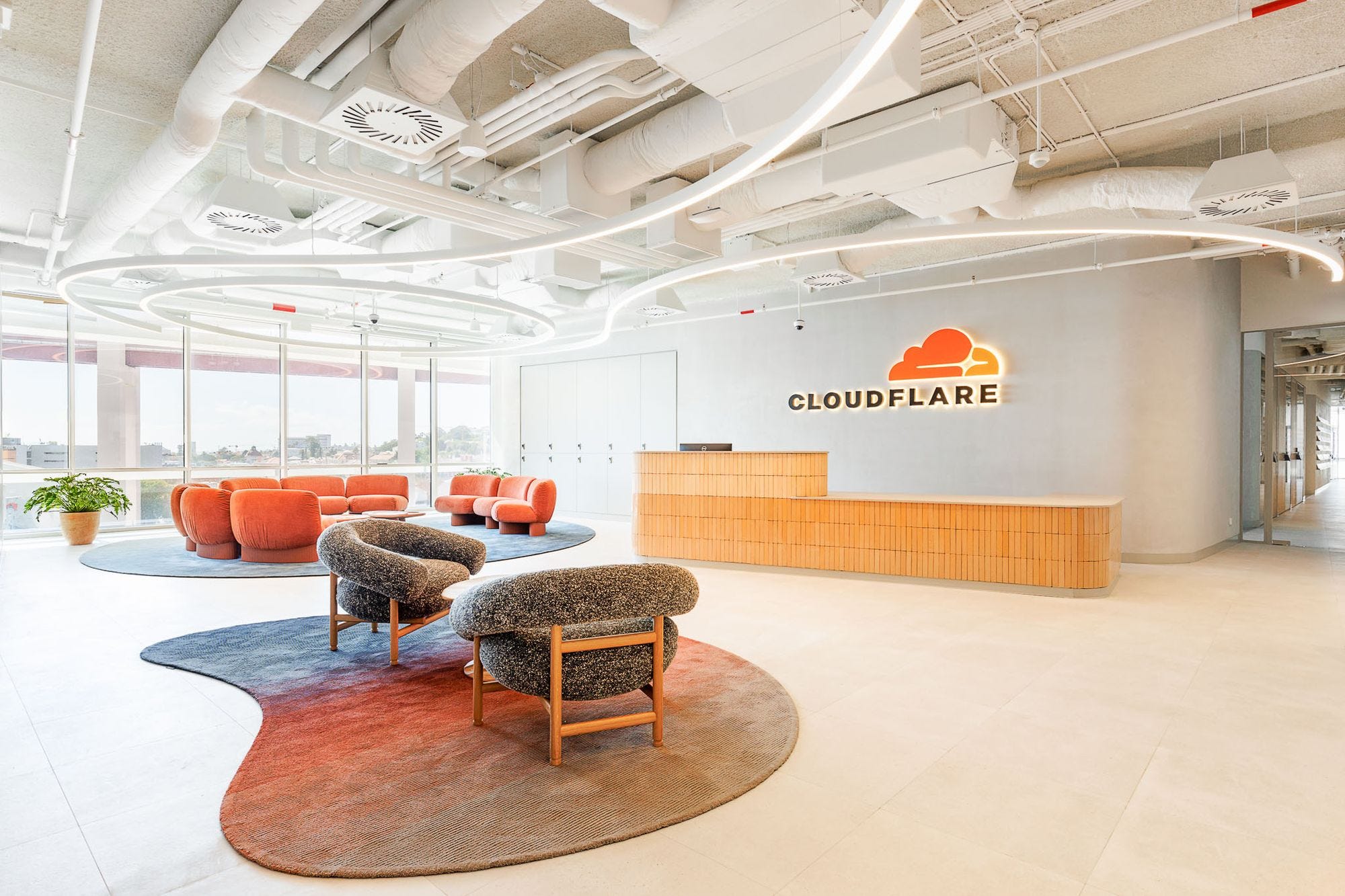
Tech shed around 30,000 jobs in May. Cloudflare was the newest big name, cutting 1,100 people, about 20% of staff, and said internal AI usage had jumped 600% in three months. That is the first time a CEO has put a productivity number on the table as the reason for the cut, in the same quarter the company hit record revenue.
Start with the number, because nobody is asking how it was measured. “Internal AI usage up 600%” counts usage, not output, and output is not value. More lines of code do not mean more products and more revenue, and it may not be the right work. Cloudflare reported the one thing that is easy to count and called it productivity.
This is what Rory Sutherland famously calls the doorman fallacy. Decide a doorman “just opens doors,” swap him for an automatic door, and you book the savings, but was that all the doorman did?

As Jerry Seinfeld learned when he helped out as a doorman, they also greet residents, hail cabs, and sign for FedEx packages.
In other words, the roles you cut on a productivity metric are almost never just the visible task. The engineer you let go was also catching the small issue before it became a public incident, filtering a bad call out of a teammate’s plan, and holding context that no dashboard tracks. The automatic door opens perfectly every time, but you find out what else the doorman did the day a couch is stolen in the lobby.
Two weeks ago, when Coinbase blamed AI for 700 layoffs and then ate a seven-hour outage three days later, I wrote that any company crediting AI for cuts gets held to a higher standard the moment its product slips.
Cloudflare just raised the bar, they run a meaningful slice of the internet’s traffic, and by citing a 600% gain, it has promised the market that the work still gets done, faster, with a fifth of the people.
The next time a big chunk of the web goes down, “we cut 20% of staff and our AI usage is up 600%” is the sentence quoted back at them in every postmortem.
You can credit AI for the layoff, but if your product slips, AI will also be blamed for your outage.
The Signal
3 takes that didn’t fit above, plus one bet.
1. Salesforce says Agentforce is a $1.2B business and the market still isn’t buying it Agentforce ARR crossed $1.2 billion, up 205%, on 3.8 billion “Agentic Work Units,” yet the stock is...
2. Anthropic’s Glasswing found 10,000 critical bugs in a month, which is the bull and the bear case at once Fifty partners using Mythos Preview turned up more than 10,000 high and critical vulnerabilities, with Cloudflare alone finding...
3. DeepMind and OpenAI both cracked open Erdős problems the same week, for the price of a dinner AlphaProof Nexus solved 9 open problems at a few hundred dollars of compute each, while an OpenAI model disproved a 1946 conjecture, and the tell was...
My bet: OpenAI’s S-1 shows a gross margin under 50% before September 30, which moves the whole conversation off...
Unlock The Signal and 3+ years of archives, $90/year →